Only GOD in the Storm, the Old Life on Shore: Why Do We Forget When the Crisis Passes?
A reflection on Quran 31:32 and related verses about turning to GOD alone in crisis, prayer, sincerity, rescue, appreciation, ingratitude, and forgetting after relief.
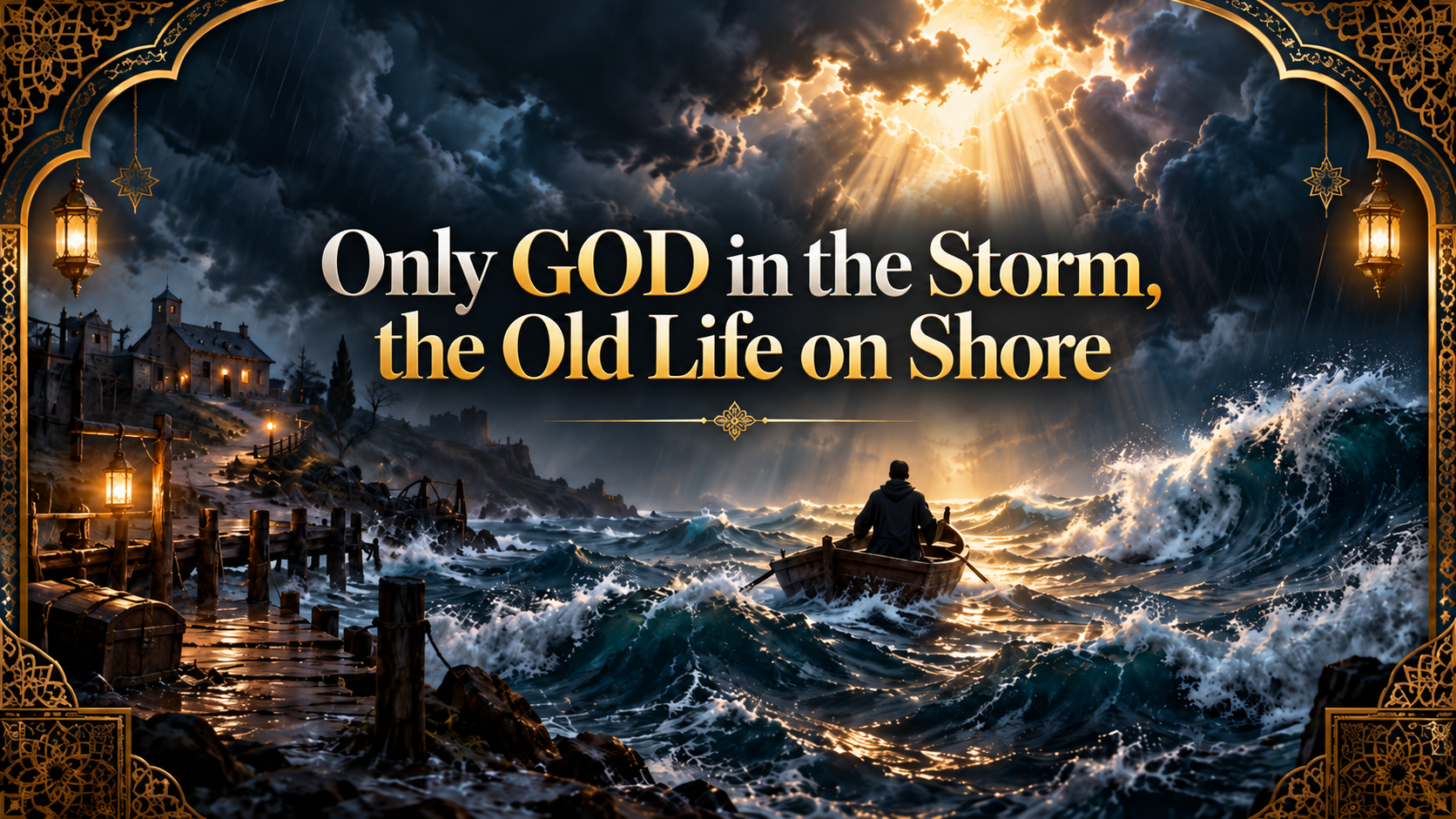
Only GOD in the Storm, the Old Life on Shore: Why Do We Forget When the Crisis Passes?
Author: Berk KÖKSAL
Date: 09.10.2026
Place: Mersin
The main purpose of this article is to reflect on the verses together with other related verses and to explore, in a sincere and profound language, what witnessing the oneness of GOD means in human life in terms of knowledge, justice, truthfulness, and submission.
Peace. Peace be upon you.
Some verses reveal what a person truly relies on not by asking what he says in ordinary circumstances, but by showing where he turns when ordinary supports collapse. 31:32 presents exactly such a scene. Violent waves surround people, familiar securities lose their force, and prayer becomes sincerely devoted to GOD alone. Yet when the shore returns, the same clarity does not always remain.
This is not merely a story about sea travel. 10:12, 16:53-54, 17:67, 29:65, 30:33, and 39:8 repeat the same human movement in different forms: distress can sharpen sincerity, while relief can restore forgetfulness. The deeper question, then, is not whether crisis can make a person call upon GOD. The harder question is why the truth exposed in crisis is so easily covered again when life becomes comfortable.
For me, the most unsettling possibility is that a person may not forget GOD because he has intellectually denied Him, but because ordinary life has returned. Plans, possessions, people, routines, and the sense of control quietly occupy the center again. The real test in 31:32 therefore begins not only when the waves rise, but when the shore appears.
Summary:
1. The Storm Exposes the Direction of the Heart
31:32
وَإِذَا غَشِيَهُم مَّوْجٌ كَٱلظُّلَلِ دَعَوُا۟ ٱللَّهَ مُخْلِصِينَ لَهُ ٱلدِّينَ فَلَمَّا نَجَّىٰهُمْ إِلَى ٱلْبَرِّ فَمِنْهُم مُّقْتَصِدٌ وَمَا يَجْحَدُ بِـَٔايَٰتِنَآ إِلَّا كُلُّ خَتَّارٍ كَفُورٍ
When violent waves surround them, they implore GOD, sincerely devoting their prayers to Him alone. But as soon as He saves them to the shore, some of them revert. None discards our revelations except those who are betrayers, unappreciative.
Şiddetli dalgalar onları sardığında, onlar dualarını samimiyetle yalnızca O’na adayarak TANRI’ya yalvarırlar. Ancak O onları kurtarıp kıyıya çıkarır çıkarmaz, bazıları eskiye geri dönerler. Nankör hainlerden başka hiç kimse vahiylerimizi bir kenara atmaz.
2. The Calm Sea Is Also a Sign
31:31 — Do you not see that the ships roam the sea, carrying GOD’s provisions, to show you some of His proofs? Indeed, these should be sufficient proofs for everyone who is steadfast, appreciative.
3. Every Blessing Is from GOD
16:53 — Any blessing you enjoy is from GOD. Yet, whenever you incur any adversity you immediately complain to Him.
16:54 — Yet, as soon as He relieves your affliction, some of you revert to idol worship.
4. Promises Made in Darkness
6:63 — Say, “Who can save you from the darkness of the land or the sea?” You implore Him loudly and secretly: “If He saves us this time, we will be eternally appreciative.”
6:64 — Say, “GOD does save you this time, and other times as well, then you still set up idols besides Him.”
5. Why Are the Idols Forgotten in Danger?
17:67 — If you are afflicted in the middle of the sea, you forget your idols and sincerely implore Him alone. But as soon as He saves you to the shore, you revert. Indeed, the human being is unappreciative.
6. Sincerity That Exists Only Under Threat
29:65 — When they ride on a ship, they implore GOD, devoting their prayers to Him. But as soon as He saves them to the shore, they revert to idolatry.
29:66 — Let them disbelieve in what we have given them, and let them enjoy temporarily; they will surely find out.
7. Turning in Distress, Scattering in Mercy
30:33 — When adversity afflicts the people, they turn to their Lord, totally devoting themselves to Him. But then, as soon as He showers them with mercy, some of them revert to idol worship.*
30:34 — Let them be unappreciative of what we have given them. Enjoy temporarily; you will surely find out.
8. Forgetting the Earlier Plea
39:8 — When the human being is afflicted, he implores his Lord, sincerely devoted to Him. But as soon as He blesses him, he forgets his previous imploring, sets up idols to rank with GOD and to divert others from His path. Say, “Enjoy your disbelief temporarily; you have incurred the hellfire.”
9. As Though He Had Never Called
10:12 — When adversity touches the human being, he implores us while lying down, or sitting, or standing up. But as soon as we relieve his adversity, he goes on as if he never implored us to relieve any hardship! The works of the transgressors are thus adorned in their eyes.
10. Distant in Blessing, Loud in Distress
41:51 — When we bless the human being, he turns away, and drifts farther and farther away, and when he suffers any affliction, he implores loudly.
11. “GOD Is Sufficient for Me”
39:38 — If you ask them, “Who created the heavens and the earth?” they will say, “GOD.” Say, “Why then do you set up idols beside GOD? If GOD willed any adversity for me, can they relieve such an adversity? And if He willed a blessing for me, can they prevent such a blessing?” Say, “GOD is sufficient for me.” In Him the trusters shall trust.
12. The Quiet Danger on Shore: Distraction
31:33 — O people, you shall reverence your Lord, and fear a day when a father cannot help his own child, nor a child can help his father. Certainly, GOD's promise is truth. Therefore, do not be distracted by this life; do not be distracted from GOD by mere illusions.
13. Tomorrow Is Not Under My Knowledge
31:34 — With GOD is the knowledge regarding the Hour (end of the world).* He is the One who sends down the rain, and He knows the contents of the womb. No soul knows what will happen to it tomorrow, and no one knows in which land he or she will die. GOD is Omniscient, Cognizant.
14. Releasing Control Every Night
6:60 — He is the One who puts you to death during the night, and knows even the smallest of your actions during the day. He resurrects you every morning, until your life span is fulfilled, then to Him is your ultimate return. He will then inform you of everything you had done.
15. Life and Death as a Test
67:2 — The One who created death and life for the purpose of distinguishing those among you who would do better.* He is the Almighty, the Forgiving.
16. Provision, Trust, and the Certainty of Death
29:57 — Every soul will taste death, then to us you will be ultimately returned.
29:58 — Those who believe and lead a righteous life, we will surely settle them in Paradise, with mansions and flowing streams. Eternally they abide therein. What a beautiful reward for the workers.
29:59 — They are the ones who steadfastly persevere, and trust in their Lord.
29:60 — Many a creature that does not carry its provision, GOD provides for it, as well as for you. He is the Hearer, the Omniscient.
17. The One Who Creates, Provides, Puts to Death, and Resurrects
30:40 — GOD is the One who created you He is the One who provides for you. He is the One who puts you to death. He is the One who resurrects you. Can any of your idols do any of these things? Be He glorified. He is much too exalted to have any partners.
18. What Remains After the Crisis?
31:32 — When violent waves surround them, they implore GOD, sincerely devoting their prayers to Him alone. But as soon as He saves them to the shore, some of them revert. None discards our revelations except those who are betrayers, unappreciative.
39:38 — If you ask them, “Who created the heavens and the earth?” they will say, “GOD.” Say, “Why then do you set up idols beside GOD? If GOD willed any adversity for me, can they relieve such an adversity? And if He willed a blessing for me, can they prevent such a blessing?” Say, “GOD is sufficient for me.” In Him the trusters shall trust.
30:40 — GOD is the One who created you He is the One who provides for you. He is the One who puts you to death. He is the One who resurrects you. Can any of your idols do any of these things? Be He glorified. He is much too exalted to have any partners.
19. Arabic Roots: Sincerity, Calling, Rescue, and Ingratitude
31:32 — When violent waves surround them, they implore GOD, sincerely devoting their prayers to Him alone. But as soon as He saves them to the shore, some of them revert. None discards our revelations except those who are betrayers, unappreciative.
17:67 — If you are afflicted in the middle of the sea, you forget your idols and sincerely implore Him alone. But as soon as He saves you to the shore, you revert. Indeed, the human being is unappreciative.
39:8 — When the human being is afflicted, he implores his Lord, sincerely devoted to Him. But as soon as He blesses him, he forgets his previous imploring, sets up idols to rank with GOD and to divert others from His path. Say, “Enjoy your disbelief temporarily; you have incurred the hellfire.”
Other Claims
31:32 — When violent waves surround them, they implore GOD, sincerely devoting their prayers to Him alone. But as soon as He saves them to the shore, some of them revert. None discards our revelations except those who are betrayers, unappreciative.
17:67 — If you are afflicted in the middle of the sea, you forget your idols and sincerely implore Him alone. But as soon as He saves you to the shore, you revert. Indeed, the human being is unappreciative.
39:8 — When the human being is afflicted, he implores his Lord, sincerely devoted to Him. But as soon as He blesses him, he forgets his previous imploring, sets up idols to rank with GOD and to divert others from His path. Say, “Enjoy your disbelief temporarily; you have incurred the hellfire.”
Conclusion
31:32 — When violent waves surround them, they implore GOD, sincerely devoting their prayers to Him alone. But as soon as He saves them to the shore, some of them revert. None discards our revelations except those who are betrayers, unappreciative.
16:53 — Any blessing you enjoy is from GOD. Yet, whenever you incur any adversity you immediately complain to Him.
39:38 — If you ask them, “Who created the heavens and the earth?” they will say, “GOD.” Say, “Why then do you set up idols beside GOD? If GOD willed any adversity for me, can they relieve such an adversity? And if He willed a blessing for me, can they prevent such a blessing?” Say, “GOD is sufficient for me.” In Him the trusters shall trust.
31:34 — With GOD is the knowledge regarding the Hour (end of the world).* He is the One who sends down the rain, and He knows the contents of the womb. No soul knows what will happen to it tomorrow, and no one knows in which land he or she will die. GOD is Omniscient, Cognizant.
6:60 — He is the One who puts you to death during the night, and knows even the smallest of your actions during the day. He resurrects you every morning, until your life span is fulfilled, then to Him is your ultimate return. He will then inform you of everything you had done.
30:40 — GOD is the One who created you He is the One who provides for you. He is the One who puts you to death. He is the One who resurrects you. Can any of your idols do any of these things? Be He glorified. He is much too exalted to have any partners.
1. The Storm Exposes the Direction of the Heart
Verse
31:32
وَإِذَا غَشِيَهُم مَّوْجٌ كَٱلظُّلَلِ دَعَوُا۟ ٱللَّهَ مُخْلِصِينَ لَهُ ٱلدِّينَ فَلَمَّا نَجَّىٰهُمْ إِلَى ٱلْبَرِّ فَمِنْهُم مُّقْتَصِدٌ وَمَا يَجْحَدُ بِـَٔايَٰتِنَآ إِلَّا كُلُّ خَتَّارٍ كَفُورٍ
When violent waves surround them, they implore GOD, sincerely devoting their prayers to Him alone. But as soon as He saves them to the shore, some of them revert. None discards our revelations except those who are betrayers, unappreciative.
Şiddetli dalgalar onları sardığında, onlar dualarını samimiyetle yalnızca O’na adayarak TANRI’ya yalvarırlar. Ancak O onları kurtarıp kıyıya çıkarır çıkarmaz, bazıları eskiye geri dönerler. Nankör hainlerden başka hiç kimse vahiylerimizi bir kenara atmaz.
Source: kuranteyit.com
Reflection on the Verse
The first striking element in 31:32 is the phrase describing people as sincerely devoting their prayers to GOD alone. Under danger, the field of reliance becomes radically simple.
Crisis can silence many secondary securities. Wealth, status, knowledge, networks, and plans may still have practical value, but their limits suddenly become visible. When a person is surrounded by waves, the illusion of self-sufficiency becomes difficult to maintain.
Yet the second half of the verse is harder than the first. Rescue does not guarantee lasting transformation. The shore returns, and some people revert. So the essential question is not only, “Whom do I call upon in the storm?” It is, “What remains of that sincerity after the storm?”
Verse references: 31:32.
2. The Calm Sea Is Also a Sign
Verse
31:31 — Do you not see that the ships roam the sea, carrying GOD’s provisions, to show you some of His proofs? Indeed, these should be sufficient proofs for everyone who is steadfast, appreciative.
Reflection on the Verse
31:31 comes immediately before the storm scene and describes ships moving through the sea as signs of GOD, especially for those who are steadfast and appreciative. That sequence matters. The sign is present before the emergency.
I often look for the extraordinary in moments of danger, but the verse directs attention to ordinary preservation as well. A safe journey, a functioning vessel, provision, and movement across the sea are already occasions for reflection.
Appreciation therefore cannot be reserved for rescue. It belongs to the calm sea too. Perhaps the best protection against returning to the old life after crisis is learning to recognize mercy before crisis arrives.
Verse references: 31:31.
3. Every Blessing Is from GOD
Verse
16:53 — Any blessing you enjoy is from GOD. Yet, whenever you incur any adversity you immediately complain to Him.
16:54 — Yet, as soon as He relieves your affliction, some of you revert to idol worship.
Reflection on the Verse
16:53 begins with a comprehensive statement: every blessing we enjoy is from GOD. Distress then makes people cry out to Him, but 16:54 shows that some return to idolatry as soon as the distress is removed.
The movement between these two verses is the movement between remembrance and appropriation. In pain, dependence becomes visible. In comfort, a person can begin to treat the blessing as though it had become independent of its Giver.
This makes me examine my own relief. When a problem is solved, do gratitude and submission deepen, or do I quickly rewrite the story so that everything appears to have been produced by my own control?
Verse references: 16:53; 16:54.
4. Promises Made in Darkness
Verse
6:63 — Say, “Who can save you from the darkness of the land or the sea?” You implore Him loudly and secretly: “If He saves us this time, we will be eternally appreciative.”
6:64 — Say, “GOD does save you this time, and other times as well, then you still set up idols besides Him.”
Reflection on the Verse
6:63 portrays people calling upon GOD openly and secretly in the darkness of land or sea and promising lasting appreciation if they are rescued. 6:64 then states that GOD does rescue them, yet they may still set up idols beside Him.
The crisis contains not only fear, but a promise. The person hears himself make a commitment. Once safety returns, however, the emotional force of that promise can fade.
This teaches me that spiritual intensity is not the same as spiritual continuity. A powerful prayer in danger may be sincere, but its truth is tested by what happens afterward.
Verse references: 6:63; 6:64.
5. Why Are the Idols Forgotten in Danger?
Verse
17:67 — If you are afflicted in the middle of the sea, you forget your idols and sincerely implore Him alone. But as soon as He saves you to the shore, you revert. Indeed, the human being is unappreciative.
Reflection on the Verse
17:67 states that when distress comes in the middle of the sea, the idols are forgotten and prayer is directed sincerely to GOD alone. This is a profound exposure of hierarchy.
The verse makes me ask why something that proves powerless in ultimate danger can regain authority once comfort returns. The question is not limited to statues. It invites me to examine whatever I may treat as an independent source of security beside GOD.
The verse does not authorize me to label every useful person, tool, or institution an idol. But if something occupies a place of ultimate trust that it cannot actually bear, crisis may reveal that distortion very quickly.
Verse references: 17:67.
6. Sincerity That Exists Only Under Threat
Verse
29:65 — When they ride on a ship, they implore GOD, devoting their prayers to Him. But as soon as He saves them to the shore, they revert to idolatry.
29:66 — Let them disbelieve in what we have given them, and let them enjoy temporarily; they will surely find out.
Reflection on the Verse
29:65 again describes prayer sincerely devoted to GOD on a ship and a return to idolatry after reaching shore. The repetition across the Quran suggests a recurring human tendency rather than an isolated event.
Threat can simplify a person by force. Submission asks whether that clarity can survive without the threat.
If sincerity needs danger in order to exist, it remains fragile. The deeper form of faith may be to preserve the same direction when nothing is visibly collapsing.
Verse references: 29:65; 29:66.
7. Turning in Distress, Scattering in Mercy
Verse
30:33 — When adversity afflicts the people, they turn to their Lord, totally devoting themselves to Him. But then, as soon as He showers them with mercy, some of them revert to idol worship.*
30:34 — Let them be unappreciative of what we have given them. Enjoy temporarily; you will surely find out.
Reflection on the Verse
30:33 says that distress makes people turn totally to their Lord, while mercy can be followed by renewed idolatry. Need exposes dependence; abundance can generate the feeling of independence.
Yet mercy does not create an area outside GOD’s sovereignty. Relief is not the moment at which the servant no longer needs the Giver.
The verse therefore transforms gratitude into a test of memory: can I receive mercy without using mercy itself as a reason to forget the One who gave it?
Verse references: 30:33; 30:34.
8. Forgetting the Earlier Plea
Verse
39:8 — When the human being is afflicted, he implores his Lord, sincerely devoted to Him. But as soon as He blesses him, he forgets his previous imploring, sets up idols to rank with GOD and to divert others from His path. Say, “Enjoy your disbelief temporarily; you have incurred the hellfire.”
Reflection on the Verse
39:8 describes a person who calls upon his Lord sincerely in adversity and then, after being blessed, forgets his former imploring. The word “forgets” is spiritually decisive.
This connects directly with the earlier article Forgetting GOD, Forgetting Ourselves. Spiritual memory is not merely remembering facts. It is allowing what I once learned about dependence to remain active in later choices.
A useful self-examination may therefore be simple: What did I ask GOD for when I was afraid? What did I promise? What changed when relief came?
Verse references: 39:8.
9. As Though He Had Never Called
Verse
10:12 — When adversity touches the human being, he implores us while lying down, or sitting, or standing up. But as soon as we relieve his adversity, he goes on as if he never implored us to relieve any hardship! The works of the transgressors are thus adorned in their eyes.
Reflection on the Verse
10:12 describes a person continuing on after relief as though he had never called upon GOD at all. This is more than ordinary forgetfulness; it is a break between the person who prayed and the person who resumed life.
The words spoken in crisis may have been sincere. But sincerity must eventually become character. Did the experience make me more appreciative, just, truthful, or humble?
The verse’s warning that transgressors’ works are beautified in their eyes also reminds me that returning to normal can itself be rationalized as harmless.
Verse references: 10:12.
10. Distant in Blessing, Loud in Distress
Verse
41:51 — When we bless the human being, he turns away, and drifts farther and farther away, and when he suffers any affliction, he implores loudly.
Reflection on the Verse
41:51 gathers the contrast into one verse: when blessed, the human being turns away and becomes distant; when afflicted, he prays loudly.
The problem is not loud prayer. The problem is reducing the relationship with GOD to emergency use. GOD is not only the One sought in distress; the blessing, life, and eventual return are also from Him.
Worship therefore belongs to the whole of life, not merely to the moments in which human control collapses.
Verse references: 41:51.
11. “GOD Is Sufficient for Me”
Verse
39:38 — If you ask them, “Who created the heavens and the earth?” they will say, “GOD.” Say, “Why then do you set up idols beside GOD? If GOD willed any adversity for me, can they relieve such an adversity? And if He willed a blessing for me, can they prevent such a blessing?” Say, “GOD is sufficient for me.” In Him the trusters shall trust.
Reflection on the Verse
39:38 questions people who acknowledge GOD as Creator and yet set up other objects of reliance beside Him. It asks whether those objects can remove adversity GOD wills or prevent a blessing He wills. Then comes the simple statement: “GOD is sufficient for me.”
This does not require abandoning ordinary means or refusing human help. The verse does not say that. It establishes the final location of trust.
Means remain means. They do not become independent sovereign powers. The storm exposes this distinction with unusual clarity.
Verse references: 39:38.
12. The Quiet Danger on Shore: Distraction
Verse
31:33 — O people, you shall reverence your Lord, and fear a day when a father cannot help his own child, nor a child can help his father. Certainly, GOD’s promise is truth. Therefore, do not be distracted by this life; do not be distracted from GOD by mere illusions.
Reflection on the Verse
Immediately after the sea scene, 31:33 warns people not to let this life distract them from GOD. The placement is striking. The visible danger of the storm may end, but the quieter danger of distraction begins.
Daily life can absorb attention without announcing itself as a spiritual threat. Work, plans, consumption, goals, and relationships need not be evil in themselves. The problem is when they occupy the place that belongs to GOD.
In that sense, the shore may be a more difficult test than the storm. The storm pushes me toward dependence; the shore reveals what I freely choose to place at the center.
Verse references: 31:33.
13. Tomorrow Is Not Under My Knowledge
Verse
31:34 — With GOD is the knowledge regarding the Hour (end of the world).* He is the One who sends down the rain, and He knows the contents of the womb. No soul knows what will happen to it tomorrow, and no one knows in which land he or she will die. GOD is Omniscient, Cognizant.
Reflection on the Verse
31:34 states that no soul knows what will happen to it tomorrow or where it will die. Even when the sea appears calm, the future is not under human mastery.
Planning and precaution are not prohibited. The verse does not teach irresponsibility. But planning is not sovereignty.
As explored in What Did You Send Ahead for Tomorrow?, uncertainty about tomorrow does not remove responsibility. It makes today morally weightier. I do not control the future, but I am responsible for the direction I choose now.
Verse references: 31:34.
14. Releasing Control Every Night
Verse
6:60 — He is the One who puts you to death during the night, and knows even the smallest of your actions during the day. He resurrects you every morning, until your life span is fulfilled, then to Him is your ultimate return. He will then inform you of everything you had done.
Reflection on the Verse
6:60 describes the night in the language of death and the morning as being raised again. The dependence revealed dramatically in the storm is therefore present quietly every night.
This connects with Being Put to Death Every Night. We surrender consciousness without guaranteeing our own return to morning.
If every morning were received as another granted interim rather than an automatic continuation, perhaps rescue would be harder to forget once the waves disappear.
Verse references: 6:60.
15. Life and Death as a Test
Verse
67:2 — The One who created death and life for the purpose of distinguishing those among you who would do better.* He is the Almighty, the Forgiving.
Reflection on the Verse
67:2 links life and death with the testing of who will do better. The storm, then, can be understood within a larger moral life rather than as an isolated interruption.
But testing is not limited to pain. Rescue is also a test. The second half of 31:32 makes that unmistakable.
The verse does not tell us the specific reason behind every individual hardship. It does, however, tell us that how we live within mortality has moral significance.
Verse references: 67:2.
16. Provision, Trust, and the Certainty of Death
Verse
29:57 — Every soul will taste death, then to us you will be ultimately returned.
29:58 — Those who believe and lead a righteous life, we will surely settle them in Paradise, with mansions and flowing streams. Eternally they abide therein. What a beautiful reward for the workers.
29:59 — They are the ones who steadfastly persevere, and trust in their Lord.
29:60 — Many a creature that does not carry its provision, GOD provides for it, as well as for you. He is the Hearer, the Omniscient.
Reflection on the Verse
29:57 states that every soul will taste death and return to GOD. The following verses praise steadfastness and trust, while 29:60 reminds us that GOD provides even for creatures that do not carry their own provision.
These verses place fear within a larger frame of trust. Human beings do not carry the whole structure of existence by themselves.
Trust does not mean carelessness. It means refusing to treat one’s own capacity as the final foundation of security.
Verse references: 29:57; 29:58; 29:59; 29:60.
17. The One Who Creates, Provides, Puts to Death, and Resurrects
Verse
30:40 — GOD is the One who created you He is the One who provides for you. He is the One who puts you to death. He is the One who resurrects you. Can any of your idols do any of these things? Be He glorified. He is much too exalted to have any partners.
Reflection on the Verse
30:40 gathers four decisive acts around GOD: creating, providing, putting to death, and resurrecting. It then asks whether any idol can perform any of them.
This verse gives conceptual depth to the storm scene. Why does distress strip away secondary objects of reliance? Because ultimate power does not belong to them.
To remember these four acts on shore is to preserve the truth that the storm briefly made impossible to ignore.
Verse references: 30:40.
18. What Remains After the Crisis?
Verse
31:32 — When violent waves surround them, they implore GOD, sincerely devoting their prayers to Him alone. But as soon as He saves them to the shore, some of them revert. None discards our revelations except those who are betrayers, unappreciative.
39:38 — If you ask them, “Who created the heavens and the earth?” they will say, “GOD.” Say, “Why then do you set up idols beside GOD? If GOD willed any adversity for me, can they relieve such an adversity? And if He willed a blessing for me, can they prevent such a blessing?” Say, “GOD is sufficient for me.” In Him the trusters shall trust.
30:40 — GOD is the One who created you He is the One who provides for you. He is the One who puts you to death. He is the One who resurrects you. Can any of your idols do any of these things? Be He glorified. He is much too exalted to have any partners.
Reflection on the Verse
Taken together, these verses show that crisis is not itself a virtue. It can expose sincerity, but the shore tests whether sincerity becomes a way of life.
39:38 locates trust in GOD. 30:40 locates creation, provision, death, and resurrection in GOD. 31:32 asks what happens when danger is gone.
My reflection therefore comes to this: the storm may reveal what I know in the deepest part of myself; life on shore reveals whether I am willing to live according to what was revealed.
Verse references: 31:32; 39:38; 30:40.
19. Arabic Roots: Sincerity, Calling, Rescue, and Ingratitude
Verse
31:32 — When violent waves surround them, they implore GOD, sincerely devoting their prayers to Him alone. But as soon as He saves them to the shore, some of them revert. None discards our revelations except those who are betrayers, unappreciative.
17:67 — If you are afflicted in the middle of the sea, you forget your idols and sincerely implore Him alone. But as soon as He saves you to the shore, you revert. Indeed, the human being is unappreciative.
39:8 — When the human being is afflicted, he implores his Lord, sincerely devoted to Him. But as soon as He blesses him, he forgets his previous imploring, sets up idols to rank with GOD and to divert others from His path. Say, “Enjoy your disbelief temporarily; you have incurred the hellfire.”
Reflection on the Verse
In 31:32, the expression for sincerely devoting the religion or prayer to GOD is built around the root خ ل ص (kh-l-ṣ), carrying the sense of purity and being freed from mixture. The movement in the verse is therefore not merely emotional intensity, but a direction purified of rival objects.
The root د ع و (d-ʿ-w) is used in the field of calling and supplication. In 31:32, 17:67, and 39:8, distress reveals the address of the prayer.
The waves in 31:32 are connected with م و ج (m-w-j), while rescue is expressed through ن ج و (n-j-w). The verse moves from being surrounded, to calling, to rescue, to the test of what follows.
The final language of ingratitude and rejection draws on ك ف ر (k-f-r). In context, the problem is not lack of experience; rescue has occurred. The problem is what happens to the meaning of that experience afterward.
Together these roots make the moral movement of the verse visible: danger purifies direction, prayer rises, rescue arrives, and then memory and appreciation are tested.
Verse references: 31:32; 17:67; 39:8.
Other Claims
Throughout religious and intellectual history, verses about storms and rescue have been connected with ideas such as innate monotheistic awareness, crisis psychology, and the human response to loss of control. Modern psychology may also offer descriptions of how severe threat changes attention and reliance.
Such explanations can be interesting, but they do not determine the main reflection here. The verses themselves state that people may sincerely call upon GOD in distress and then revert after rescue. They do not provide a complete psychological mechanism for why this happens.
It would also be excessive to label every modern attachment or useful human means an “idol.” The Quranic concern is with rival objects of ultimate reliance beside GOD, not with declaring every relationship or practical cause illegitimate.
Conclusion
The storm in 31:32 makes me think less about fear than about clarity. When the waves rise, many illusions become difficult to maintain, and prayer becomes simple: GOD alone. Yet the verse refuses to romanticize the moment. Some people return to the old life as soon as the shore appears.
That makes the deeper question not what I do in the crisis, but who I become after it. Do the promises of distress become the character of comfort? Does rescue make me more appreciative, truthful, just, and submitted?
16:53 reminds me that every blessing is from GOD. 39:38 says, “GOD is sufficient for me.” 31:34 reminds me that tomorrow is not under my knowledge. 6:60 turns even morning into a granted return. 30:40 places creation, provision, death, and resurrection with GOD alone.
The thought that remains with me is this: the storm may not create monotheism; it may simply uncover the dependence that comfort had allowed me to hide.
GOD knows best.
Note
2:32 — Onlar, “Sana yücelik olsun. Senin bize öğrettiğinden başka bizim hiçbir bilgimiz yok. Sen Her Şeyi Bilensin, En Bilgesin.” dediler.
GOD knows best.
Source: kuranteyit.com
Discover
Related Articles
Quran Reflections
How Can I Follow Abraham’s Path? How Can I Find the Way Abraham Found?
A reflection on Abraham’s Quranic path through monotheism, seeking truth, guidance, submission, appreciation, rejection of idolatry, and servanthood.
Read article
Quran Reflections
[2:166] Leaders and Followers: Whom Are the Leaders Following?
A 19-section Quran reflection centered on 2:166, Satan's deceptive leadership, leaders who are themselves followers, the limits of Satan's influence, religious authority, testimony, justice, monotheism, and human responsibility.
Read article
Quran Reflections
The Great Mystery of Destiny: Are We Free, or Is Everything Already Written?
A reflection centered on 57:22: prior recording, human will, GOD’s will, prayer, change, and accountability, without turning destiny into an excuse.
Read article