The Heavy Message: Why Was the Quran Given as a “Heavy” Word?
A reflection on Quran 73:5 and related verses about the Quran as a heavy message, night contemplation, careful study, reverence, knowledge, mercy, and responsibility before GOD.
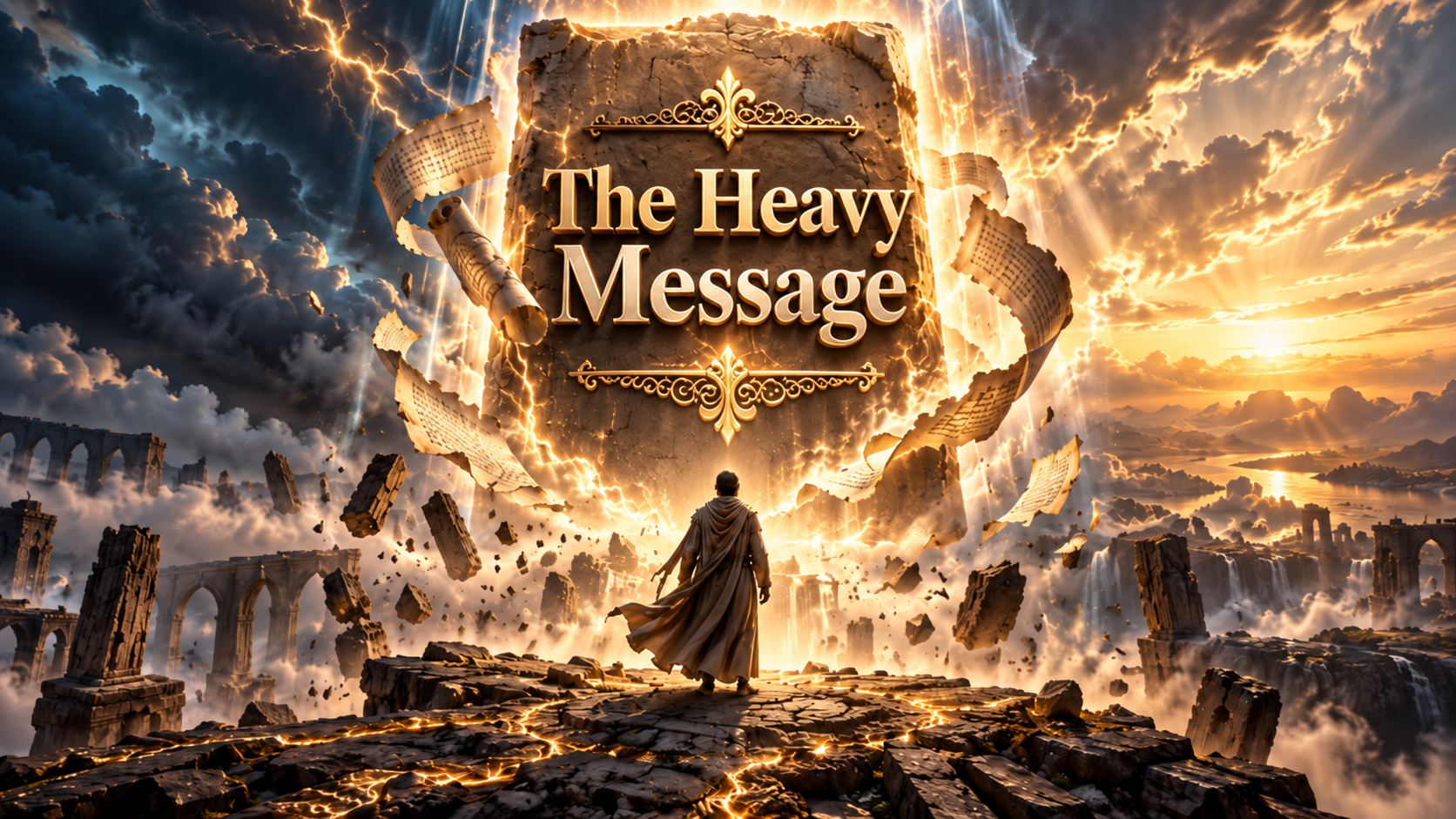
The Heavy Message: Why Was the Quran Given as a “Heavy” Word?
Author: Berk KÖKSAL
Date: September 12, 2026
Place: Mersin
The central purpose of this article is to contemplate the verses together with other related verses, and to consider sincerely and deeply what bearing witness to the oneness of GOD means in human life in terms of knowledge, justice, truthfulness, and submission.
Peace. Peace be upon you.
The phrase “a heavy message” can immediately suggest difficult rules or an unbearable burden. Yet the flow of Sura 73 gives a wider frame: before the heavy message, there is night reflection, careful Quran reading, and a movement away from the distractions of the day.
I therefore hesitate to reduce 73:5 to “difficult commands.” The weight of the message may also concern the attention, fidelity, transformation, and responsibility that truth demands. The image in 59:21 of a mountain crumbling before the Quran deepens that seriousness.
The question of this article is: If the Quran is a heavy message, how can we receive it without turning it into a light habit?
Summary:
1. What Does “We Will Give You a Heavy Message” Say?
73:5
إِنَّا سَنُلْقِى عَلَيْكَ قَوْلًا ثَقِيلًا
We will give you a heavy message.
Biz sana ağır bir mesaj vereceğiz.
2. Withdrawing into the Night Before the Heavy Message
73:2 — Meditate during the night, except rarely.
73:3 — Half of it, or a little less.
73:4 — Or a little more. And read the Quran from cover to cover.
3. Night Reflection and Truthfulness
73:6 — The meditation at night is more effective, and more righteous.
4. Does the Busyness of the Day Make the Message Lighter?
73:7 — You have a lot of time during the day for other matters.
5. Remembering the Lord and Drawing Near
73:8 — You shall commemorate the name of your Lord, to come ever closer and closer to Him.
6. Heaviness Is Not a Merciless Burden
73:20 — Your Lord knows that you meditate during two-thirds of the night, or half of it, or one-third of it, and so do some of those who believed with you. GOD has designed the night and the day, and He knows that you cannot always do this. He has pardoned you. Instead, you shall read what you can of the Quran. He knows that some of you may be ill, others may be traveling in pursuit of GOD’s provisions, and others may be striving in the cause of GOD. You shall read what you can of it, and observe the contact prayers (Salat), give the obligatory charity (Zakat), and lend GOD a loan of righteousness. Whatever good you send ahead on behalf of your souls, you will find it at GOD far better and generously rewarded. And implore GOD for forgiveness. GOD is Forgiver, Most Merciful.
7. If Even a Mountain Would Crumble
59:21 — If we revealed this Quran to a mountain, you would see it trembling, crumbling, out of reverence for GOD. We cite these examples for the people, that they may reflect.
8. Responsibility and Freedom of Choice
33:72 — We have offered the responsibility (freedom of choice) to the heavens and the earth, and the mountains, but they refused to bear it, and were afraid of it. But the human being accepted it; he was transgressing, ignorant.*
9. The Skin Trembles, Then the Heart Softens
39:23 — GOD has revealed herein the best Hadith; a book that is consistent, and points out both ways (to Heaven and Hell). The skins of those who reverence their Lord cringe therefrom, then their skins and their hearts soften up for GOD’s message. Such is GOD’s guidance; He bestows it upon whomever He wills. As for those sent astray by GOD, nothing can guide them.
10. Carefully Studying the Quran
47:24 — Why do they not study the Quran carefully? Do they have locks on their minds?
11. Not Fearing Examination of Coherence
4:82 — Why do they not study the Quran carefully? If it were from other than GOD, they would have found in it numerous contradictions.*
12. Learning Without Haste
20:114 — Most Exalted is GOD, the only true King. Do not rush into uttering the Quran before it is revealed to you, and say, “My Lord, increase my knowledge.”
75:16 — Do not move your tongue to hasten it.
75:17 — It is we who will collect it into Quran.
75:18 — Once we recite it, you shall follow such a Quran.
75:19 — Then it is we who will explain it.
13. Quran at Dawn
17:78 — You shall observe the Contact Prayer (Salat) when the sun declines from its highest point at noon, as it moves towards sunset. You shall also observe (the recitation of) the Quran at dawn. (Reciting) the Quran at dawn is witnessed.
14. Knowing Scripture as It Should Be Known
2:121 — Those who received the scripture, and know it as it should be known, will believe in this. As for those who disbelieve, they are the losers.
15. Human Speech Before the Honorable Book
41:41 — Those who have rejected the Quran’s proof* when it came to them, have also rejected an Honorable book.
41:42 — No falsehood could enter it, in the past or in the future;* a revelation from a Most Wise, Praiseworthy.
16. How Can a Heavy Message Become an Abandoned Book?
25:30 — The messenger* said, “My Lord, my people have deserted this Quran.”
17. Bearing the Message Is Responsibility, Not Superiority
73:5 — We will give you a heavy message.
33:72 — We have offered the responsibility (freedom of choice) to the heavens and the earth, and the mountains, but they refused to bear it, and were afraid of it. But the human being accepted it; he was transgressing, ignorant.*
18. What Does the Heavy Message Change in My Life?
73:5 — We will give you a heavy message.
47:24 — Why do they not study the Quran carefully? Do they have locks on their minds?
39:23 — GOD has revealed herein the best Hadith; a book that is consistent, and points out both ways (to Heaven and Hell). The skins of those who reverence their Lord cringe therefrom, then their skins and their hearts soften up for GOD’s message. Such is GOD’s guidance; He bestows it upon whomever He wills. As for those sent astray by GOD, nothing can guide them.
19. Arabic Word Roots: Speech and Weight
73:5 — We will give you a heavy message.
Other Claims
73:5 — We will give you a heavy message.
73:20 — Your Lord knows that you meditate during two-thirds of the night, or half of it, or one-third of it, and so do some of those who believed with you. GOD has designed the night and the day, and He knows that you cannot always do this. He has pardoned you. Instead, you shall read what you can of the Quran. He knows that some of you may be ill, others may be traveling in pursuit of GOD’s provisions, and others may be striving in the cause of GOD. You shall read what you can of it, and observe the contact prayers (Salat), give the obligatory charity (Zakat), and lend GOD a loan of righteousness. Whatever good you send ahead on behalf of your souls, you will find it at GOD far better and generously rewarded. And implore GOD for forgiveness. GOD is Forgiver, Most Merciful.
Conclusion
73:5 — We will give you a heavy message.
73:20 — Your Lord knows that you meditate during two-thirds of the night, or half of it, or one-third of it, and so do some of those who believed with you. GOD has designed the night and the day, and He knows that you cannot always do this. He has pardoned you. Instead, you shall read what you can of the Quran. He knows that some of you may be ill, others may be traveling in pursuit of GOD’s provisions, and others may be striving in the cause of GOD. You shall read what you can of it, and observe the contact prayers (Salat), give the obligatory charity (Zakat), and lend GOD a loan of righteousness. Whatever good you send ahead on behalf of your souls, you will find it at GOD far better and generously rewarded. And implore GOD for forgiveness. GOD is Forgiver, Most Merciful.
59:21 — If we revealed this Quran to a mountain, you would see it trembling, crumbling, out of reverence for GOD. We cite these examples for the people, that they may reflect.
39:23 — GOD has revealed herein the best Hadith; a book that is consistent, and points out both ways (to Heaven and Hell). The skins of those who reverence their Lord cringe therefrom, then their skins and their hearts soften up for GOD’s message. Such is GOD’s guidance; He bestows it upon whomever He wills. As for those sent astray by GOD, nothing can guide them.
47:24 — Why do they not study the Quran carefully? Do they have locks on their minds?
4:82 — Why do they not study the Quran carefully? If it were from other than GOD, they would have found in it numerous contradictions.*
20:114 — Most Exalted is GOD, the only true King. Do not rush into uttering the Quran before it is revealed to you, and say, “My Lord, increase my knowledge.”
75:16 — Do not move your tongue to hasten it.
1. What Does “We Will Give You a Heavy Message” Say?
Verse
73:5
إِنَّا سَنُلْقِى عَلَيْكَ قَوْلًا ثَقِيلًا
We will give you a heavy message.
Biz sana ağır bir mesaj vereceğiz.
Source: kuranteyit.com
Reflection on the Verse
73:5 is very short, yet it gives a powerful direction. Calling the message “heavy” separates it from ordinary speech. GOD’s word is not presented as content to consume and move past, but as a word that requires response.
The verse does not define every dimension of that heaviness by itself. Its immediate context therefore matters: night reflection, Quran reading, remembrance of GOD, and later a merciful recognition of human capacity.
My first lesson is that the Quran is not heavy because it is inaccessible. It is heavy because it cannot be received faithfully while being treated lightly.
Verse references: 73:5.
2. Withdrawing into the Night Before the Heavy Message
Verse
73:2 — Meditate during the night, except rarely.
73:3 — Half of it, or a little less.
73:4 — Or a little more. And read the Quran from cover to cover.
Reflection on the Verse
73:2-4 places night reflection and sustained Quran reading immediately before the mention of the heavy message. The sequence suggests that serious truth requires intellectual space.
During the day, work, speech, and reaction scatter the mind. Night can create room for gathered attention. The point is not to romanticize the night itself, but to make space for reflection.
Seeing a verse and truly remaining before it are not the same experience. A heavy message requires a mind still enough to bear weight.
Verse references: 73:2; 73:3; 73:4.
3. Night Reflection and Truthfulness
Verse
73:6 — The meditation at night is more effective, and more righteous.
Reflection on the Verse
73:6 says that night reflection is more effective and more conducive to truthfulness. Contemplation is therefore not merely emotional intensity; it is a discipline connected to truth.
When the mind becomes quieter, excuses and self-defense can become easier to see. The key question is not only “What did this verse make me feel?” but “What truth is this verse asking me to accept?”
The weight of the message becomes moral here: truth is not merely something to speak, but something that must be allowed to correct me.
Verse references: 73:6.
4. Does the Busyness of the Day Make the Message Lighter?
Verse
73:7 — You have a lot of time during the day for other matters.
Reflection on the Verse
73:7 recognizes that the day contains abundant activity. Work, family, provision, and responsibility are real; the Quran does not erase them.
But if all time is filled by outward occupation, no inward room may remain for the message. A heavy message introduces an ethics of time: what I make room for reveals what I truly consider important.
Taking the Quran seriously does not require abandoning life. It requires establishing a center within life where revelation can order everything else.
Verse references: 73:7.
5. Remembering the Lord and Drawing Near
Verse
73:8 — You shall commemorate the name of your Lord, to come ever closer and closer to Him.
Reflection on the Verse
73:8 does not leave reflection as an intellectual exercise. It commands remembrance of the Lord and drawing nearer to Him. Knowledge is joined to devotion and submission.
A person can learn much and still live far from GOD. If reading makes me more proud and harsh without deepening reverence, I should question whether I am truly bearing the message’s weight.
The goal of the heavy word is not merely to fill the mind, but to correct direction.
Verse references: 73:8.
6. Heaviness Is Not a Merciless Burden
Verse
73:20 — Your Lord knows that you meditate during two-thirds of the night, or half of it, or one-third of it, and so do some of those who believed with you. GOD has designed the night and the day, and He knows that you cannot always do this. He has pardoned you. Instead, you shall read what you can of the Quran. He knows that some of you may be ill, others may be traveling in pursuit of GOD’s provisions, and others may be striving in the cause of GOD. You shall read what you can of it, and observe the contact prayers (Salat), give the obligatory charity (Zakat), and lend GOD a loan of righteousness. Whatever good you send ahead on behalf of your souls, you will find it at GOD far better and generously rewarded. And implore GOD for forgiveness. GOD is Forgiver, Most Merciful.
Reflection on the Verse
73:20 brings an essential balance. GOD recognizes that people cannot always maintain the same night practice; illness, travel, and seeking provision are acknowledged. They are then told to read as much of the Quran as they can.
Weight and mercy are therefore not opposites. The message is serious, but the One who gives it knows human limits.
The verse cuts two extremes: treating the Quran lightly and turning it into a performance of crushing religiosity.
Verse references: 73:20.
7. If Even a Mountain Would Crumble
Verse
59:21 — If we revealed this Quran to a mountain, you would see it trembling, crumbling, out of reverence for GOD. We cite these examples for the people, that they may reflect.
Reflection on the Verse
59:21 gives an example: if the Quran were revealed to a mountain, it would tremble and crumble from reverence for GOD. The verse explicitly presents this as an example.
A mountain evokes strength, yet in the image it breaks before revelation. A human being can read the Quran and continue as though nothing happened.
Perhaps one sign of receiving the message’s weight is that some part of my self-defense begins to crack.
Verse references: 59:21.
8. Responsibility and Freedom of Choice
Verse
33:72 — We have offered the responsibility (freedom of choice) to the heavens and the earth, and the mountains, but they refused to bear it, and were afraid of it. But the human being accepted it; he was transgressing, ignorant.*
Reflection on the Verse
33:72 says that responsibility was offered to the heavens, earth, and mountains, while the human being accepted it. It does not use the same expression as 73:5, so the verses should not be collapsed into one statement.
Read together, however, they deepen human responsibility before revelation. The message does not remain an external sound; a person must decide how to live after hearing it.
Bearing the heavy message is not a title of superiority. It is greater accountability.
Verse references: 33:72.
9. The Skin Trembles, Then the Heart Softens
Verse
39:23 — GOD has revealed herein the best Hadith; a book that is consistent, and points out both ways (to Heaven and Hell). The skins of those who reverence their Lord cringe therefrom, then their skins and their hearts soften up for GOD’s message. Such is GOD’s guidance; He bestows it upon whomever He wills. As for those sent astray by GOD, nothing can guide them.
Reflection on the Verse
39:23 describes the response to the Quran in two movements: the skin shudders, then the skin and heart soften toward GOD’s message.
The result of weight is therefore not permanent fear or hardness. Religious seriousness is sometimes confused with anger and cruelty, yet the verse speaks of a softened heart.
The message’s weight should make me less arrogant and more careful, less hard and more submitted.
Verse references: 39:23.
10. Carefully Studying the Quran
Verse
47:24 — Why do they not study the Quran carefully? Do they have locks on their minds?
Reflection on the Verse
47:24 asks directly why people do not carefully study the Quran. Calling a book sacred is not the same as carefully studying it.
Careful study means resisting selective quotation, seeing context, and avoiding hurried judgment.
If the message is heavy, reading is also a responsibility. The Quran should not become a storehouse of quotations serving my existing desires.
Verse references: 47:24.
11. Not Fearing Examination of Coherence
Verse
4:82 — Why do they not study the Quran carefully? If it were from other than GOD, they would have found in it numerous contradictions.*
Reflection on the Verse
4:82 again calls for careful study and says that if the Quran were from other than GOD, many contradictions would be found in it.
This gives an important kind of confidence: the Quran does not despise examination. A heavy message is not a fragile structure protected by forbidding questions.
My religious claims should also remain open to examination. Truth should not fear questions.
Verse references: 4:82.
12. Learning Without Haste
Verse
20:114 — Most Exalted is GOD, the only true King. Do not rush into uttering the Quran before it is revealed to you, and say, “My Lord, increase my knowledge.”
75:16 — Do not move your tongue to hasten it.
75:17 — It is we who will collect it into Quran.
75:18 — Once we recite it, you shall follow such a Quran.
75:19 — Then it is we who will explain it.
Reflection on the Verse
20:114 teaches the prayer “My Lord, increase my knowledge” while warning against rushing the Quran. 75:16-19 also restrains haste.
Quick answers and large conclusions from one verse can be tempting. Respect for knowledge sometimes requires waiting.
Being able to say “I do not know” is also part of bearing the message’s weight. The humility of 2:32 is that we possess no knowledge except what GOD has taught.
Verse references: 20:114; 75:16; 75:17; 75:18; 75:19.
13. Quran at Dawn
Verse
17:78 — You shall observe the Contact Prayer (Salat) when the sun declines from its highest point at noon, as it moves towards sunset. You shall also observe (the recitation of) the Quran at dawn. (Reciting) the Quran at dawn is witnessed.
Reflection on the Verse
17:78 specifically mentions Quran reading at dawn. Revelation is therefore given a concrete place in the rhythm of life.
Dawn begins a new day. Placing the Quran at that threshold can orient the day before its many tasks begin.
Its value lies not in performance, but in regular and sincere contact.
Verse references: 17:78.
14. Knowing Scripture as It Should Be Known
Verse
2:121 — Those who received the scripture, and know it as it should be known, will believe in this. As for those who disbelieve, they are the losers.
Reflection on the Verse
2:121 speaks of those who received scripture and know it as it should be known. This distinguishes possession from genuine knowledge.
A book may be in my home and verses may be on my tongue, yet knowing it properly implies a deeper relationship.
Before claiming the Quran as “my book,” I need to allow it to remove me from the errors I possess.
Verse references: 2:121.
15. Human Speech Before the Honorable Book
Verse
41:41 — Those who have rejected the Quran’s proof* when it came to them, have also rejected an Honorable book.
41:42 — No falsehood could enter it, in the past or in the future;* a revelation from a Most Wise, Praiseworthy.
Reflection on the Verse
41:41-42 describes the Quran as an honorable book and says that falsehood cannot enter it. Revelation and human interpretation therefore should not be placed on the same level.
My interpretation can be wrong. So can the interpretation of a scholar, writer, or community.
The healthiest religious authority is authority that never puts its own speech in the place of the Quran and remains answerable to revelation.
Verse references: 41:41; 41:42.
16. How Can a Heavy Message Become an Abandoned Book?
Verse
25:30 — The messenger* said, “My Lord, my people have deserted this Quran.”
Reflection on the Verse
25:30 reports the messenger saying that his people abandoned the Quran. A book can remain physically present while its guidance is pushed to the edge of life.
The Quran may remain in the home, on a phone, or in ceremonies while other standards actually govern decisions.
The statement “I love the Quran” therefore needs another question beside it: “Where has the Quran changed me?”
Verse references: 25:30.
17. Bearing the Message Is Responsibility, Not Superiority
Verse
73:5 — We will give you a heavy message.
33:72 — We have offered the responsibility (freedom of choice) to the heavens and the earth, and the mountains, but they refused to bear it, and were afraid of it. But the human being accepted it; he was transgressing, ignorant.*
Reflection on the Verse
Relationship with a heavy message does not grant a special right to pride. 33:72 says that the human being accepted responsibility while also mentioning transgression and ignorance.
Claiming to know the Quran does not reduce responsibility; it increases it, because the gap between speech and action becomes more visible.
Turning the message into proof of “our superiority” can convert its weight into decoration for the ego.
Verse references: 73:5; 33:72.
18. What Does the Heavy Message Change in My Life?
Verse
73:5 — We will give you a heavy message.
47:24 — Why do they not study the Quran carefully? Do they have locks on their minds?
39:23 — GOD has revealed herein the best Hadith; a book that is consistent, and points out both ways (to Heaven and Hell). The skins of those who reverence their Lord cringe therefrom, then their skins and their hearts soften up for GOD’s message. Such is GOD’s guidance; He bestows it upon whomever He wills. As for those sent astray by GOD, nothing can guide them.
Reflection on the Verse
The heavy message should not remain an abstract idea. Read together, 73:5, 47:24, and 39:23 examine three areas: how I read, how my heart responds, and where my life is directed.
Do I study the Quran carefully? Do the verses soften my heart? If a truth I learn changes nothing in daily decisions, have I really borne it?
Bearing the heavy message should mean speaking more carefully rather than merely speaking more, and correcting myself more rather than issuing more verdicts.
Verse references: 73:5; 47:24; 39:23.
19. Arabic Word Roots: Speech and Weight
Verse
73:5 — We will give you a heavy message.
Reflection on the Verse
Two words stand at the center of 73:5: قَوْلًا (qawlan) and ثَقِيلًا (thaqilan). ق-و-ل (q-w-l) belongs to the field of saying and speech. What is heavy is explicitly a word/message.
ث-ق-ل (th-q-l) carries the field of heaviness. Here it qualifies the word. It is therefore more cautious not to reduce the weight to one explanation, but to recognize the seriousness and responsibility associated with the message.
سَنُلْقِي (sanulqi) is connected with ل-ق-ي (l-q-y), carrying the sense of delivering or bringing something. قُرْآن in 73:4 is connected with ق-ر-أ (q-r-ʾ), the field of reading/recitation. The heavy word remains tied to reading and conscious orientation.
Verse references: 73:5.
Other Claims
Traditional interpretations offer several explanations of the “heavy word.” Some emphasize reports of revelation being physically heavy for the receiver; others focus on the weight of commands and responsibility; others on the seriousness of the Quran’s meaning and effect.
73:5 itself does not explain the mechanism of the heaviness. The main argument here rests on the immediate Quranic context: night reflection, Quran reading, truthfulness, remembrance of GOD, and the merciful balance of 73:20.
Conclusion
Returning to 73:5, the “heavy message” no longer means merely a difficult burden. It means truth that cannot be treated lightly.
59:21 deepens the seriousness through the image of the mountain. 39:23 shows that seriousness can soften the heart. 47:24 and 4:82 call for careful study. 20:114 and 75:16-19 restrain haste. 73:20 balances the whole picture with mercy.
My conclusion is this: The weight of the Quran is not making it a symbol carried on the shoulders, but allowing it to become a measure that corrects life.
If a verse is truly heavy for me, sometimes I must change an opinion, remain silent, apologize, return a right, or admit that I do not know. The message’s weight may become most visible in such real transformations.
GOD knows best.
Note
2:32 — They said, “Be You glorified, we have no knowledge, except that which You have taught us. You are the Omniscient, Most Wise.”
GOD knows best.
Source: kuranteyit.com
Discover
Related Articles
Quran Reflections
[17:23–24] Duties toward Parents in the Quran: Respect, Justice, and Conscience
A 19-section Quran reflection centered on 17:23-24: honoring parents, a father's relationship with a daughter after divorce, the mother's responsibilities, truthful testimony, marriage, financial pressure, and the limits of family authority.
Read article
Quran Reflections
[53:24] What Is It That the Human Being Desires?
A 19-part Quran reflection centered on 53:24, exploring human desires, divine guidance, knowledge, justice, ego, worldly attachments, religious authority, the Hereafter, monotheism, and submission to GOD.
Read article
Quran Reflections
[43:60] Can Angels Reproduce? Could Earth Have Held Another Kind of Creation?
A 19-section reflection on Quran 43:60, exploring whether angels could colonize and reproduce on Earth, angelic creation, their duties, knowledge, obedience, and the limitless creative power of GOD.
Read article